Given the overwhelming response to my previous post (thanks redditors!) I think I owe people a follow-up. I pinned my blog post on reddit just as a random experiment, only because I felt “well, I’d like some opinions on this”. I expected a few heads up and some “lol you’re a loser” comment. It was amazing to see it skyrocket on top of its section for more than 24 hours, re-twittered, re-facebooked etc. all over the world -I had a quite successful blog in Italian once, but nothing like that ever happened to me. I received a mails from people all over. With more than 60.000 hits, that post is by far and large the most read thing I’ve ever published [1]. There are several reflections on what happened in the comments etc. that deserve a bit of discussion.
We are not alone.

Not this time, so cheer up!
This is the first obvious consideration: the large majority of comments were “me too” stories, either of graduate students/scientists with serious doubts on academia, or of people who left academia to do something else (almost invariably much happier than before). A few ones were stating that academia worked perfectly for them, or even that they went to academia from a non-academic work and were happy to do so.
I am sure that academia works for a lot of people. In fact, I thought it worked for much more people than I expected. But to see bad experiences similar to mine shared by so many was eye-opening and somehow frightening. There is really something wrong with the ways of academic work out there.
I am thinking of ways on how to pursue/help this further. I am still not sure of how, but some kind of hub should be made specifically for this kind of problems; a place where people can find support, or that keeps people updated on this kind of problems. There are places for generic science career help, or generic forums for graduate students etc., but I haven’t seen something tackling the pressure, unfair competition etc. of academia and trying to push things to change, or at least to be better countered. Hints welcome.[2]
Also: Are there studies on the (cultural, psychological, life style) impact of science work on scientists themselves -that is, what does science to scientists? For sure there will be some, but I am not aware of it, and I’d like to dig it. Again, hints welcome.
What science should do for itself?
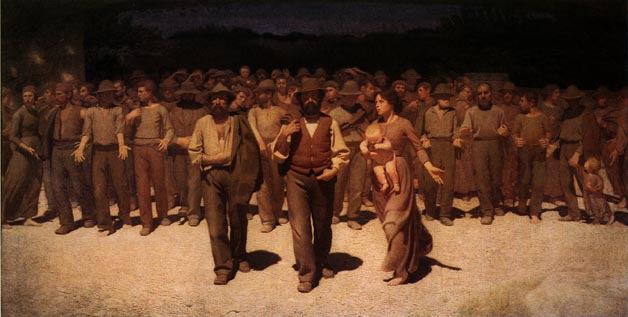
Yes, perhaps.
The incredible response makes me also think again what about a friend of mine said a few weeks ago, that often it’s not the strictly scientific endeavours that influence science more. This has important implications. Scientists are good at science, and somehow at securing their funding, but it seems a constant, in the variety of opinions, that the system is seriously broken at many levels [3]. Almost every blog by a scientist has something to say about what’s wrong with the science career pyramid or its funding processes, and articles like the Economist infamous one, or this from Times Education seem to confirm there are lots of alarm bells ringing.
This brings us to the reflection that scientists seem to have little way of influencing, here and now, how science should be done. It seems they are passive Darwinian subjects evolving within internal and external constraints on which they are powerless. The politics of what governmental or private funding want to fund, or the editorial policies of top journals are only some of these factors. Scientists adapt to this environment, but there is extreme general inertia in the community about standing up and changing it -or even to bring themselves to a table and begin working on it.
Notice that I am not advocating an utopia in which scientists decide everything from themselves in an ivory tower -which would be impossible, after all, and also not healthy- but it seems to me there is no way for them to consistently, formally have a voice in their own work structure -especially for youngest workers like graduate students or postdoctoral researchers.
I talked with people.
Reactions from people I have close were mixed, but most of them were supportive. A lot of persons asked me to reconsider, on grounds that Cambridge is a very infamous place from the workplace health point of view, but that there are lots of other places with much nicer enviroments.
I agree with them: there are lots of places where one can do science and live in a probably relatively healthy and happy professional environment. However the stress induced by the pressure of securing funding, securing publications for publications’ sake etc. are too much for me now. I’m broken, and I need to heal. Perhaps in 6 months, or 1 year, I will come back to research full time, but now I cannot. Also I want to see what’s out there. Perhaps what’s out there is not for me as well, but how can I know without trying? I have to get a life and see how life works.
My (ex)principal investigator also talked to me today: he invited me to a cafe and we talked a lot. He seemed genuinely human and supportive and he said me he was very happy of my work so far and sad I interrupt it, but that he respects my choice if it doesn’t make me feel well. He even offered to let me wait a few months and then let me come back later, with funding, and he asked me not to cut contacts completely. Cambridge’s environment is too toxic for me to ever think of coming back, but it has been nice and interesting anyway -we could still collaborate at a distance in the future, who knows. We discussed a lot about the kind of environment there is (he thinks it’s unavoidable for it to be so and that it is hopeless to try to stop people doing that: I disagree, but he had his points) and about the difficulties and learning experiences that research means.
The ones I heard less were my peer collegues (with a few happy, warm exceptions -thanks, you know who you are)[4]. Not surprisingly, given their overall personality. Just an anecdote: When I packed up my stuff last week there were three people in my office. I was taking down all my stuff -books, laptop, etc. from shelves and desk and putting it in a trolley. Nobody even turned at me to ask what I was doing. They surely have seen me -they are not deaf and dumb. They didn’t care at all, not even a “huh, what’s up with these books in the trolley dude?”.
Am I brave?

At least I did it, but is it courage the same?
A lot of friends, and even my ex-supervisor, are telling me I’ve been very brave to do it. I frankly don’t know: even in the worst case scenario, I still have a family to come back for a while. I’d hate it, because I hate to depend from other people but, as someone commented in a forum, social and family networks are there for these cases. I simply couldn’t cope anymore with a situation, and decided to cut it when it was impossible to sustain, at least for now. Is it bravery? I don’t think so. Brave could have been, after all, battling against all odds. But it is not often so easy to see if I’m battling windmills or real giants.
What am I going to do?
Who knows. It’s going to be hard. Job market is notoriously awful. I am quite confident it won’t be before 1 year that I’ll find a proper job, given how it works, but we will see.
Here and now I need something much less stressful, to recover. But in general: from scientific publishing to some industry job, from programming (I want to learn properly some C++ and SQL in this period) to technician, whatever.
I suck at written English.

Please inspect mine too.
Many redditers were laughing at the poor English of my previous post. I can’t disagree with them, and well, that’s something more to learn. People in the comments are more than welcome to become SS Obersturmbannfuehrers’ of the Grammar Nazi Party and point me the errors, so that I can learn (and fix the posts).
People don’t read Ph.D. Comics.
Finally, I peppered the previous post with a couple of “Ph.D. Comics” strips (apologies to Jorge Cham for this). I thought everybody would recognize them as, er, comics. A significant minority of commentators thought I draw the diagrams myself. This is a lesson in communication (things that seems shared obvious knowledge often are not) and in attention (the authorship of the strips was clearly written in the strips themselves, yet many ignored it). And, jeez, people: don’t you read Ph.D. comics?!?
[1] To be honest, I had a correspondence published on Nature about open access a couple of years ago, and when I was a teenager I had the honour of a letter of mine published on the Corriere della Sera, one of the top Italian newspapers. Both things probably were skimmed over by at least as many people as the post. However in the first case the impact around blogs and networks was almost zero, and in the second, well, I doubt it had any real impact despite a million-people readership. Let’s say it’s had the most direct, measurable impact so far.
[2] By the way, I have to say that during my Cambridge postdoc I went to the University consulting to seek help. It distinctly sucked: the mix of trivial, insensate advices they blabbered at me without even listening me made me wonder if they thought I was retarded, or if they were retarded.
[3] Even if how and why , and especially how to solve it are all subject of debate. But this shouldn’t be a debate ping-ponged through some blogs, it should be a global debate between scientists, a real debate.
[4] And, viceversa, a cold “takedown” request by one of the unnamed subjects of the episodes cited. Which I rejected: you make my life miserable, and then you complain if you could be exposed for that? Not going to happen, dude: you’ve stopped fucking with me.
It’s redditOr, not redditEr, you heretic!
About having a hub for alternative careers: the only self organized place on the web I know about is this: http://www.leavingacademia.com/
It has never being a good project though and it’s shutting down for the same reason. It looks there is a lot of demand and this could be not just useful, also a business!
[...] This post was mentioned on Twitter by Bill Tozier, Jason Heppler. Jason Heppler said: Goodbye academia: The aftermath. – blog.devicerandom http://t.co/zOaSFVT // follow-up from the blog I shared this weekend [...]
You are awfully correct: there are way too many with your experience out there and in most places it’s going to get worse, not better.
I can attest to the competitive, nasty work environment at so-called ‘top-level’ institutions: they attract exactly these people because of their reputation. I was lucky, I managed to stay away from them. I’d question that research at smaller universities is boring or irrelevant. On the contrary, because you don’t have the careerists, you can actually focus on the science, in my experience.
There are many different ways of ‘doing science’ both inside and outside of academia. If you’re as passionate about science as it seems, you’ll find your life in science.
Good luck!
Two things.
First off, congratulations on making this decision. Clearly, it was one you had to make. I hope if it comes down to it and I have to make a decision like yours that I can be half as brave as you.
Secondly-Have you put this entry up on reddit as well? I know they would appreciate knowing that there is a follow up. Also, considering the enormous response your previous entry generated when you put it on Reddit, I think that there is a distinct possibility that you may find enough people of similar opinions as you (that academia is defunct, etc etc) to potentially come together and form a website or other resource, so that people who come to decisions like the one you made can feel better informed and more confident.
Best of luck in all you do.
Hi,
Thanks for the comments: I didn’t want to “blogspam” too much, but indeed I’ve put this entry as well on reddit now.
Some re-posted your story because they know its the tip of the iceberg
http://www.science20.com/alpha_meme/and_another_one_throws_towel_and_leaves_science-76487
Damn it.I thought your grammer style in your first post was awesome,I copied the post to give to my Eng 121 Prof and ask her to identify the style.I had even started to incorporate this “cool” style into an Essay due this week. So much for that.
Just wanted to say thanks for the heads up about PHD comics. I’m no longer studying but I have many friends that do and they’re all really close to the bone!
Jake
http://www.schuhlelewis.com/
Props to you man.
I know exactly how you feel.
The thing I hate the most is the “publish for the sake of publishing and advancing your career”.
It is this quantity over quality that has destroyed academia and the proliferation of unethical bastards that care about their asses only.
My advise (been there, doing that) is to take your time. First heal your emotional injuries, and do get a job in the industry. You’ll find it boring, but having some money to feed yourself is not. And then, once you’ve recovered you’ll get your love for doing things back and you can sanely decide what to do next.
Heed to your principal’s advise: keep open lines of communication. Even if you never go back to your lab, at least you have a social contact with someone who is clearly smart and understands you, and from what you wrote seems to appreciate you deeply.
Don’t break this contact.
- 0l
I dropped out of university for two reasons.
I went to what is considered the best university in my country, but after about 2 years I dropped out. I was very disappointed with the whole experience. The lecturers were terrible, there was a constant pressure to hand in pointless papers and the curricula were not really well aligned with what I needed. Some of the classes just didn’t make any sense at all — both due to useless curricula and exceptionally incompetent lecturers.
(I went to an elite school before university and I was somewhat spoilt by having brilliant teachers who knew how you teach effectively. At the university I stopped going to lectures because almost none of my professors knew anything about teaching.)
The second reason was that there was a lot of interesting stuff going on in my field at the time and I didn’t want to miss it. I chose to participate in, and study that instead. This meant that I spent a lot of time in the library and in the lab reading and teaching myself things that were not part of the curriculum. From math subjects that you normally study later to acquiring more practical skills. Which in turn meant that I failed a lot of exams for more subjects more peripherial to my field.
Don’t get me wrong, one should have some breadth to one’s education, but I thought that the Msc program was ill focused. I was basically being educated for what might have been a good mix of subjects 30 years ago.
I spent the next 7-8 years working part time at the university and studying on my own. As my classmates graduated they got higher paying jobs than me. However, very few of them had my depth of knowledge across a wide range of subjects in my field. Also, I had lots of practical experience.
Eventually I started my own company. With absolutely zero funding. After a few years I sold the company for a considerable lump of cash and stock and became an employee in the company that bought us.
That was 12 years ago. Since I have worked for several of the top tier companies in my field. Companies you have heard of and whose products you use every day. Companies that have hiring standards that are extremely high. All of them have been aware of the fact that I didn’t have a degree.
An interesting side-note: the higher the hiring standards: the easier it was for me to get in. One company, famous for its extremely ardous hiring process, spent a LOT of money securing my services. This was probably because their interview process was very intensive and they focused on what I knew and what I could do rather than the formalities.
It is almost funny that most run-of-the-mill tech companies would probably not hire me or give me a shitty offer.
Right now I have a very senior position in a very large international company. My formal title could lead you to believe that I’m a traditional executive, but I’m not. I get to define my own job and I get to work on what I like to work on. I have immense amounts of freedom and I get paid well.
Now to summarize: I am not suggesting you drop out of school. Getting a degree is always a good thing. In part because it gives you a piece of paper to get bread-and-butter jobs, but also in part because most people benefit from an education.
I succeeded because I never stopped studying. It has been nearly 20 years since I dropped out and to this day I still study and learn. I read a lot of books, I read lots of scientific papers in my field and I have branched out and studied things that are not really my field. Very few people I went to school with still do this to this extent.
I also execute. I write software, I communicate extensively with people in my field, I act as a hub in my professional sphere and I rarely accept the status quo if I am not satisfied with something. I affect change, I push other people to do better and I mentor.
People notice this.
The most important lesson life has taught me is that NOBODY will tell you what to do. You have to figure it out yourself and they you have to DO it. Another important lesson is that: you CAN do things. If you have a great idea: you can act on it. Don’t invent excuses. Just do stuff.
Also, practical skills matter. There is no point in taking, for instance, a math course if you cannot apply what you have learnt. Most academics are terrible at this — which makes them lousy scientists and even worse practitioners. This is perhaps my biggest problem with academia: they produce lots and lots of candidates that need an additional 3-5 years to develop skills in applying knowledge.
The classic training paradigm encourages exponential growth in the number of trained scientists, but historically funding levels have rarely grown that way, typically they grow arithmetically (tracking inflation) or sometimes worse. Needless to say those two curves will cross at some point, and probably did somewhere back in the 1980s (versus the heyday of molecular biology, my field, in the 60s and 70s). Since funding is more or less out of our control, the only way to ease the tension is to slow training rates. That would require some kind of central management to prevent universities from simply hiring more and more recruits (as they’ve been doing for decades now) and letting the new faculty fight it out jungle-style for the shrinking share of grants.
When I read your first article, I just thought that I wished a talented person like you had gotten into a warm and collaborative group. I’m sure that if you get back into science, you’ll join a team who care about each other and would be more likely to throw a party for you than not even look as you walked out the door. And I’m sad to say that people who love the system are more likely to be the ones who take power and run “science”, while the people who hate a cutthroat military industrial complex turn their backs on it. Your personal health comes first, but I have to say that given that “this shouldn’t be a debate ping-ponged through some blogs, it should be a global debate between scientists, a real debate” it’s doubly sad to see you go since you have a strong voice, and it seems you’ve left the “between scientists” category to ping-pong blog posts. Happy enclaves of science will miss you, and the science policy debates will miss you. No matter what you do, hope you’re happier and happier doing what you love with people you love every day.
Hi,
Although I also observed some of the cases of the academic misbehaviour described in your previous post (and even plagiarism of my works by some people) and agree that now it’s hard to find a research job, I wouldn’t support your decision to give up and leave given your age.
Last summer/fall I was in a similar desperate situation (but without anti-depressants of course — I do extreme sports instead). I was applying for a permanent job (national-wide competition in on of the EU countries, not in Italy). My experience was matching one of the proposed profiles by 100%, but the position on that profile was given to a low-qualified protegee of the selection committee member. At that time I decided that I would quit research and start a personal business project unless I could find a tenure-track or permanent job starting in 2011. However, things went differently.
I’m 30, made PhD 4.5 years ago in (…prefer not do disclose…) At the end of my PhD I had difficulties with my supervisor, but everything was finished after the defense when I joined a good team in a different lab led by a very sharp and hard-working “a-political” lady well known in the community for her enormous productivity and well-cited results. I worked “for and with” that team quite a small fraction of my time (20%) but sufficient to advance in the project, the rest was “independent research”, i.e. I did what I wanted to do and what was interesting to me. After three years I moved to another place (where I’m now), where the political situation was much harder. Here the lab management is not happy about my independence although my contract says about 50% of my own time. Anyway, in 4.5 years after my PhD I published over 20 refereed papers, 70% of them as the 1st author including one in the world-leading interdisciplinary scientific journal. I became well known and recognised in the community in several fields of my “independent research”.
However, all this did not help to find a job. During the 2010/2011 recruitment campaign I submitted over 30 applications to tenure-track positions (mostly but not only in the US although I strongly prefer Europe) and was not shortlisted in any of them so far. And the reason was that I was completely “out of the system”, i.e. out of large teams and collaborations ruling the field. So, I was depressed and because of that desperate situation.
The situation changed drastically a few weeks ago. I was contacted by one of the top US universities (really top) where I didn’t even apply, because there were no public openings. They offered me a permanent research job with some support duties for a fraction of my time. And even these duties are exactly about what I love to do, that is complex data analysis. And in my opinion, this is much better than teaching duties and endless grant-writing on normal tenure-track faculty positions. Before this happened to me, I even couldn’t have thought about such a possibility.
So, of course it’s up to you to decide, but I wouldn’t be so pessimistic at your career stage about the future.
Good luck!
Well, 20 papers in 4.5 years, including a Nature/Science is an enormous output (at least in my discipline) -I couldn’t arrive even close to that. No surprise you landed with a good job! And 70% of the time away from lab projects is unthinkable here. I very much admire (and envy a tiny bit) you. But your case isn’t the norm, not even for skilled people.
If anything, your story confirms my case: if even with such a CV you had 30 applications refused, it means the career options are really few.
Joe: You’re right about the ping-pong , but I’m currently thinking about options to bring the debate further than here. We’ll see what I manage to realize.